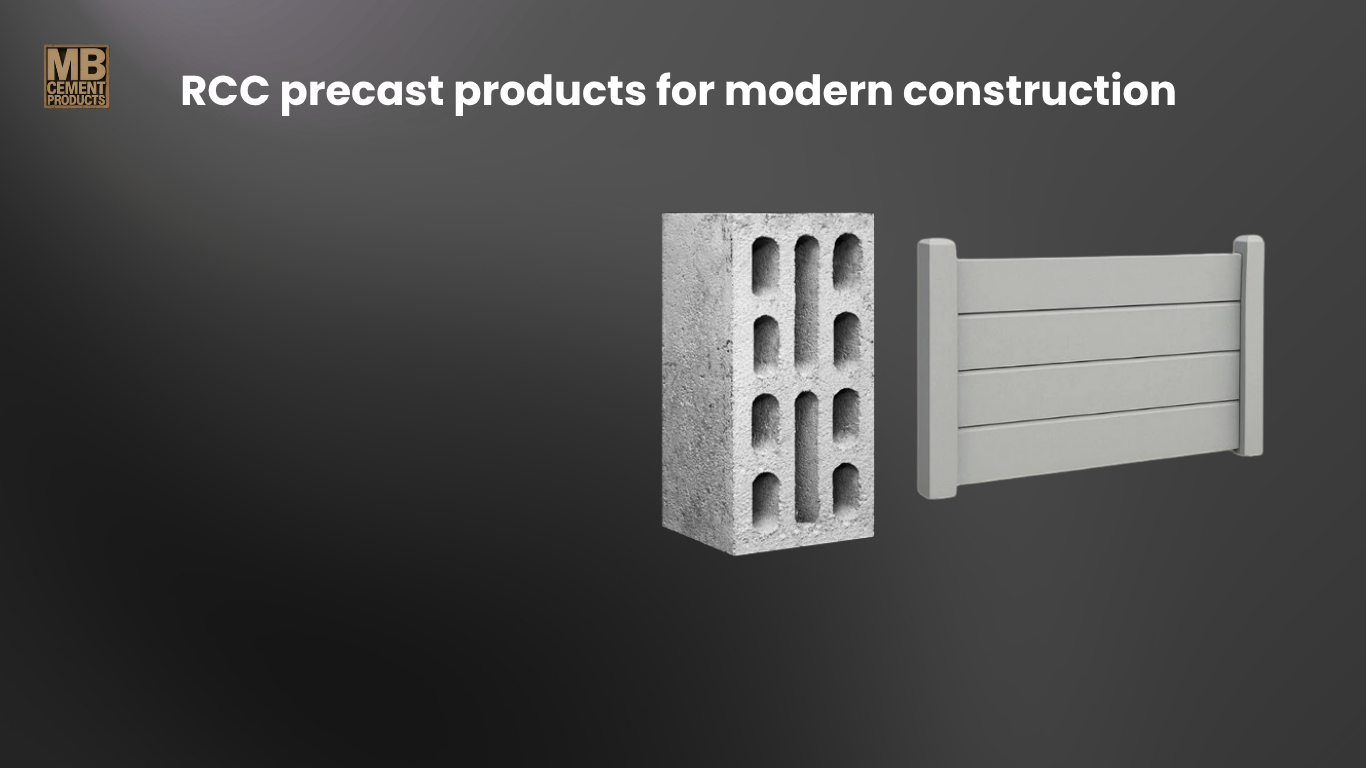
RCC Precast Products: Durable and Efficient Solutions for Modern Construction
RCC Precast Products: Durable and Efficient Solutions for Modern Construction
Modern construction calls for solutions that are strong and durable, yet efficient and cost-effective. RCC precast products have emerged as one of the reliable choices for versatile structural solutions among builders, architects, and contractors. Be it modular walls, beams, or decorative facades, these precast elements make the construction process easy, reduce labor costs, and ensure long-lasting performance. We will discuss the benefits, applications, and innovations of RCC precast products and why they seem to be gaining the top spot in modern construction in this blog.
RCC Precast Products for Structural Efficiency and Durability
RCC precast products offer unparalleled durability and structural integrity for a wide array of residential, commercial, and industrial applications. Manufactured under controlled conditions, these products assure consistent quality, accuracy in dimensions, and increased strength compared to conventional cast-in-place solutions. With the use of precast components, construction projects can realize shorter completion timelines without compromising on safety and durability standards.
Builders and engineers favor RCC precast products because they have greater resistance to environmental stress, heavy loads, and temperature and moisture variations. In this context, the use of modular walls, RCC beams, and prefabricated structural elements guarantees a cohesive and solid base for any structure. Furthermore, with their concomitant reduction in material waste and less on-site work, precast elements are an environmentally friendly building solution.
Applications of RCC Precast Products in Modern Construction
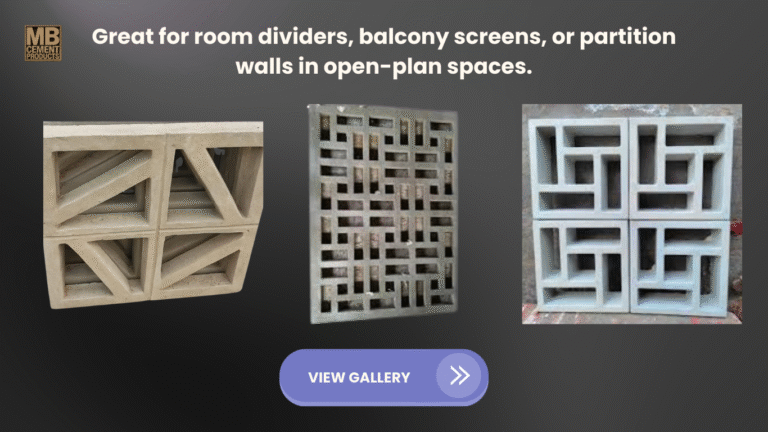
RCC precast products are very versatile and can be used for a lot of different construction applications. Precast beams and columns provide essential support for multi-story buildings, ensuring stability and safety. The modular walls are ideal for residential and commercial projects where speed and precision are vital. Decorative facades and cladding panels enhance the aesthetic appeal, without compromising the structural integrity of RCC constructions.
The prefabricated components are finding their application in boundary walls, industrial warehouses, parking structures, and infrastructure projects. The uniformity in quality of RCC precast products ensures perfect fitting of these elements during assembling, minimizing errors and labor costs. Secondly, the use of prefabricated elements enables contractors to plan projects more effectively, thereby offering better timelines and independence from weather conditions, which is not possible with conventional methods of construction.
Advantages of RCC Precast Products for Builders and Architects
The benefits of RCC precast products include those other than durability and efficiency, such as cost-effectiveness, design flexibility, and environmental benefits. Labor and material costs are reduced for builders, since the precast components are manufactured in controlled conditions and require only minimal on-site adjustments. Architectural design versatility is also a major benefit; precast products can be tailored to exact dimensions, style, and finish.
Beyond that, RCC precast products contribute to sustainable construction. The controlled manufacturing process minimizes material wastage and reduces carbon emissions compared to conventional methods. In addition, the modular nature of these elements allows for easier maintenance, repairs, and in some cases even relocation of such parts, which is particularly ideal for long-term infrastructure planning.
A perfect balance between strength, efficiency, and visual appeal can be achieved by integrating RCC precast products into the construction project. Precast elements-from residential buildings to large facilities-are made easier to construct without compromising quality standards.
Conclusion
The RCC precast products have transformed the course of modern construction through durable, efficient, and versatile solutions for various building needs. Their applications vary from structural components like beams and modular walls to decorative facades and boundary walls, which are not only functional but also appealing. Such advantages as reduced construction time, cost savings, design flexibility, and sustainability make it obvious why precast solutions are gaining such prominence in the construction industry. In the view of builders, architects, and contractors who do not compromise on quality, precision, and efficiency, RCC precast products are not an option but a compulsion. By leveraging these prefabricated elements, construction projects can achieve superior structural performance while maintaining modern design standards.