RCC Pipe vs PVC Pipe Difference: Strength, Lifespan & Cost Explained
When planning any construction, drainage, or water-management project, understanding the RCC Pipe vs PVC Pipe Difference becomes extremely important. Every type of pipeline—whether for sewage lines, stormwater drains, culverts, irrigation systems, or industrial wastewater—relies heavily on the strength, lifespan, and stability of the material used. The wrong choice can increase maintenance costs, cause structural failure, or reduce the life of the entire project.
In India, two materials dominate underground drainage and sewer systems: RCC pipes and PVC pipes. Both serve specific purposes, but they differ in performance, durability, installation suitability, and long-term value. This blog clearly explains the major RCC Pipe vs PVC Pipe Difference to help you choose the best material for your project.
What Are RCC Pipes?
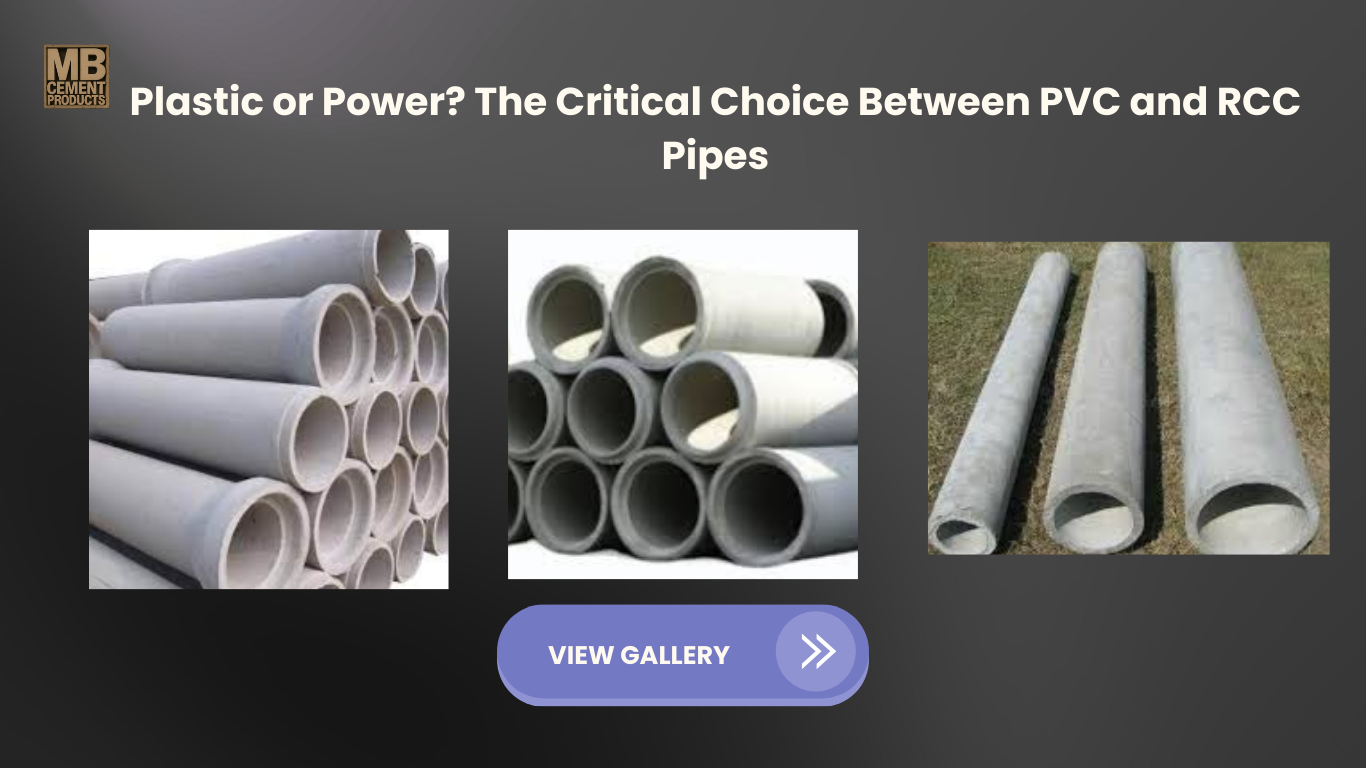
RCC (Reinforced Cement Concrete) pipes are heavy-duty, precast concrete pipes that come with internal steel reinforcement. They are specifically engineered to withstand heavy pressure, soil loads, vehicle traffic, and harsh weather conditions.
Common Uses of RCC Pipes
- Underground drainage systems
- Sewage pipelines
- Stormwater drains
- Culverts & road crossings
- Industrial wastewater lines
- Heavy-load municipal projects
Key Features of RCC Pipes
- Extremely strong and rigid
- Can withstand heavy vehicle loads
- Long lifespan (50–75+ years)
- Fireproof, corrosion-resistant & weather-resistant
- Ideal for large-scale and permanent infrastructure
RCC pipes are the preferred choice for all municipal, heavy-duty, and long-term underground installations.
What Are PVC Pipes?
PVC (Polyvinyl Chloride) pipes are lightweight plastic pipes used mainly for small-scale water supply and low-pressure applications.
Common Uses of PVC Pipes
- Home plumbing
- Irrigation systems
- Low-pressure drainage
- Electrical conduits
- Small wastewater systems
Key Features of PVC Pipes
- Lightweight and easy to install
- Smooth inner surface ensures good water flow
- Corrosion-free
- Flexible and easy to cut
- Low-cost option
- Best suited for low-load and indoor applications
PVC pipes are excellent for residential and agricultural use, but not suitable for heavy-duty underground projects.
RCC Pipe vs PVC Pipe: Detailed Comparison
Understanding the RCC Pipe vs PVC Pipe Difference becomes easy when we evaluate major performance factors.
Strength & Load-Bearing Capacity
- RCC Pipes:
Built to handle heavy loads from buses, trucks, soil pressure, and road traffic. - PVC Pipes:
Cannot tolerate heavy load or pressure; may deform or collapse.
Winner: RCC Pipes
(Perfect for roads, highways, industrial areas)
Lifespan
- RCC Pipes:
Last 50–75 years or more under harsh underground conditions. - PVC Pipes:
Average lifespan is 15–20 years, depending on soil and temperature.
Winner: RCC Pipes
Installation Suitability
- RCC: Roads, highways, railways, industrial zones, culverts
- PVC: Homes, gardens, small drainage areas
Winner: Depends on the application
But for infrastructure → RCC wins clearly
Cost Comparison
- PVC pipes: Cheaper initially
- RCC pipes: Higher initial price but require almost no maintenance, resulting in lower long-term cost
Winner: RCC Pipes
(Long-term cost efficiency)
Environmental Impact
- RCC: Made from natural and recyclable materials like cement, sand, aggregates, and steel
- PVC: Made from plastic, not eco-friendly
Winner: RCC Pipes
Resistance to Damage
- RCC Pipes:
Fireproof, heat-resistant, impact-resistant, and strong under pressure - PVC Pipes:
Can melt during high heat; deforms under heavy pressure
Winner: RCC Pipes
Where Should You Use RCC and PVC Pipes?
Best Uses for RCC Pipes
- Drainage chambers
- Sewer lines
- Culverts and stormwater drains
- Under-road pipelines
- Industrial wastewater systems
- Canal systems
- Municipal infrastructure
RCC pipes are trusted by PWD, municipal bodies, construction companies, industrial projects, and large housing developers.
Best Uses for PVC Pipes
- Household plumbing
- Garden irrigation
- Indoor water supply
- Cable and electrical conduits
- Low-pressure wastewater lines
PVC is excellent when the load is low and installation needs to be simple.
Why RCC Pipes Are the Preferred Choice for Infrastructure
Brands like MB Cement Products manufacture IS-certified, high-strength RCC pipes that offer:
- Outstanding load capacity
- Long-term durability
- Zero maintenance
- Superior safety
- Stable performance under pressure
This makes RCC pipes the most reliable option for any major civil or municipal project.
FAQs on RCC Pipe vs PVC Pipe Difference
1. Which pipe lasts longer: RCC or PVC?
RCC pipes last 50–75 years, far longer than PVC.
2. Which pipe is best for underground drainage?
RCC pipes are ideal for underground drainage and sewage systems.
3. Can PVC pipes be used in heavy traffic areas?
No, PVC pipes cannot handle high pressure or heavy loads.
4. Are RCC pipes environmentally friendly?
Yes, RCC pipes are made from natural, recyclable materials.
5. Which pipe is more cost-effective long-term?
RCC pipes, because they require almost zero maintenance.
Final Verdict: Understanding the RCC Pipe vs PVC Pipe Difference
If your project involves roads, drainage systems, municipal work, industrial load, or long-term underground installation, RCC pipes are the safest and most durable choice.
However, for small-scale plumbing, gardening, irrigation, or indoor water supply, PVC pipes are more affordable and easier to handle.
Choosing the right type of pipe ensures:
✔ Better safety
✔ Longer lifespan
✔ Fewer repairs
✔ Stronger infrastructure
With trusted manufacturers like MB Cement Products, you get IS-certified, durable, and long-lasting RCC pipes suitable for projects of all sizes across India.